
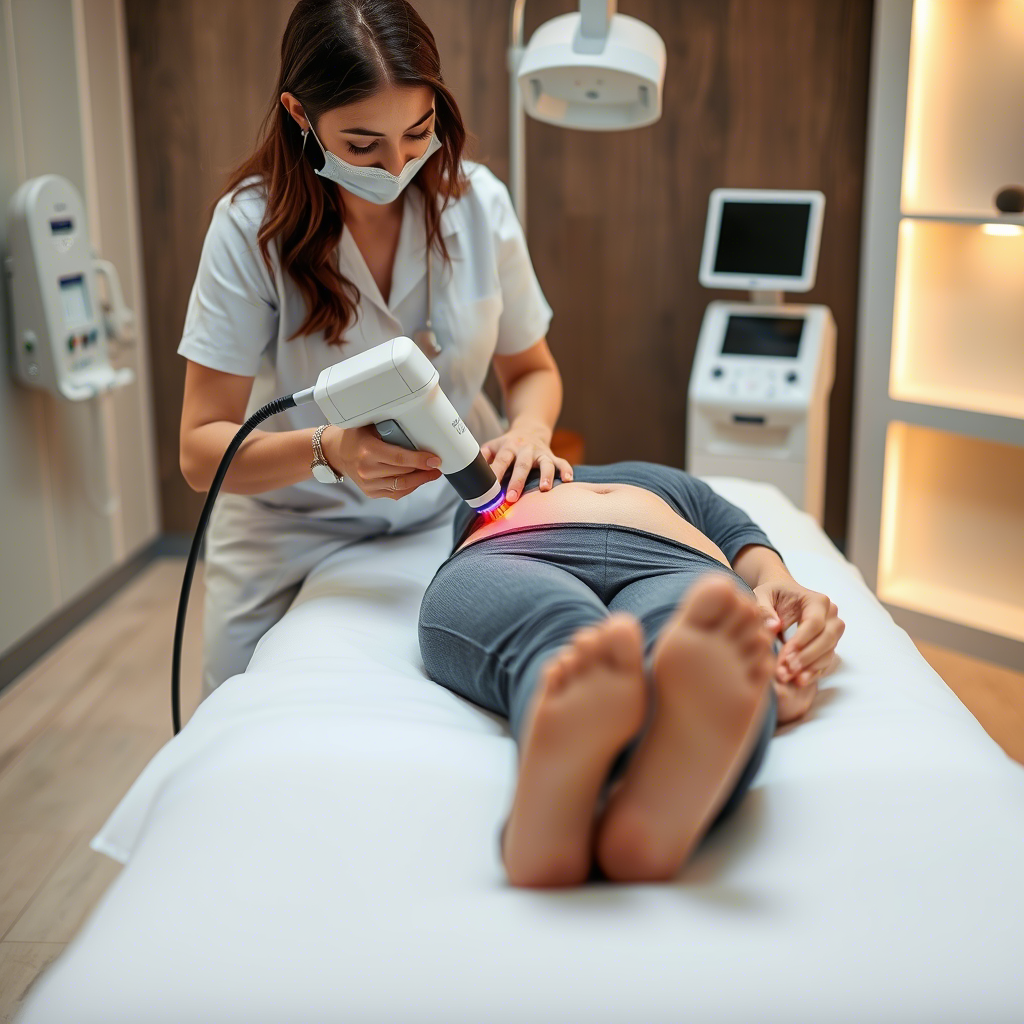
The beauty industry has always relied on the human touch. But today, that touch is being guided by algorithms.
We are witnessing the largest skills shift in aesthetics since the introduction of laser therapy. For training academies and clinics alike, Artificial Intelligence (AI) is no longer a futuristic concept—it is the new baseline for precision.
At [Your Academy Name] , we believe that to master the devices of tomorrow, you must train on the intelligence of today. Here is how AI and smart devices are revolutionizing how we learn, treat, and predict results.
1. The Digital Eye: AI-Powered Skin Analyzers
Gone are the days of guessing a client’s Fitzpatrick type by sight alone. Modern aesthetics training now begins with multi-spectral imaging.
How it works:
Smart skin analyzers (like the ones in our tech-equipped labs) use polarized, UV, and RGB light to map up to 10 layers of the skin. AI algorithms then quantify:
- Porphyrins (bacteria)
- UV damage not yet visible to the naked eye
- Vascular lesions and melanin density
- Pore depth and wrinkle volume
Impact on training: Students learn to diagnose with data, not opinion. They compare their visual assessment against the AI’s report, bridging the gap between subjective observation and objective measurement.
“Before using the skin analyzer, I was nervous about recommending chemical peels. Now, I see the hydration and sensitivity scores instantly. It’s like having a radiologist next to you.” – Sarah, Level 4 Aesthetics Student
2. Practice Without Pressure: VR Simulation Training
The scariest part of aesthetics training? The first time you hold a needle or a laser handpiece to a live model.
Enter Virtual Reality (VR) simulation. Our lab features haptic-feedback VR headsets that replicate the resistance, angle, and depth of real injections and laser passes.
Why this matters for E-E-A-T:
- Expertise: Students log 50+ simulated hours before touching a real client.
- Safety: Muscle memory for adverse reaction protocols (e.g., vascular occlusion) is practiced in VR first.
- Outcomes: Graduates have steadier hands and lower complication rates.
VR doesn’t replace the mentor—but it creates a confident, muscle-memorized practitioner before they ever pick up a real device.
3. Predictive Treatment Planning: AI as the Co-Pilot
This is where innovation gets truly exciting. AI is moving from diagnosis to prediction.
Using historical data from thousands of similar skin types and ages, predictive AI models can now:
- Forecast treatment response (e.g., “70% chance of 40% pigment reduction after 2 IPL sessions”).
- Suggest combination therapies (e.g., “RF microneedling + topical tranexamic acid”).
- Map aging trajectories over 5, 10, and 20 years.
In the classroom: Our trainees learn to input client data, analyze the AI’s suggested treatment tree, and then critique it. The goal is not blind obedience to AI, but augmented decision-making. Students must justify why they would modify the AI’s plan—teaching clinical reasoning at an advanced level.
4. The Hard Question: Data Privacy in the Smart Clinic
With great data comes great responsibility. This is the non-negotiable pillar of our training curriculum.
Smart devices generate biometric data (facial scans, vascular maps, mole tracking). This is protected health information.
How we train data privacy:
- On-device processing: We prioritize analyzers that compute images locally, not in the cloud.
- Anonymization protocols: Students learn to strip metadata before uploading case studies.
- GDPR/CCPA compliance: Every treatment plan includes a digital consent form specifically for AI data usage.
Trust is the ultimate luxury good. We teach that privacy hygiene is just as important as needle hygiene.
The Verdict: Augmentation, Not Automation
Let’s be clear: AI will not replace the aesthetician. But an aesthetician using AI will absolutely replace the one who doesn’t.
At The Derma Academy Germany, our mission is to produce graduates who are tech-native but empathy-first. The algorithm can calculate volume loss; it cannot hold a hand during a nervous first appointment.
By integrating AI skin analysers, VR simulation, and predictive planning into our core curriculum, we are not just teaching treatments. We are teaching risk management, diagnostic excellence, and digital ethics.
Ready to train with the machines that lead the industry?
Book a tour of our Tech-Equipment……