
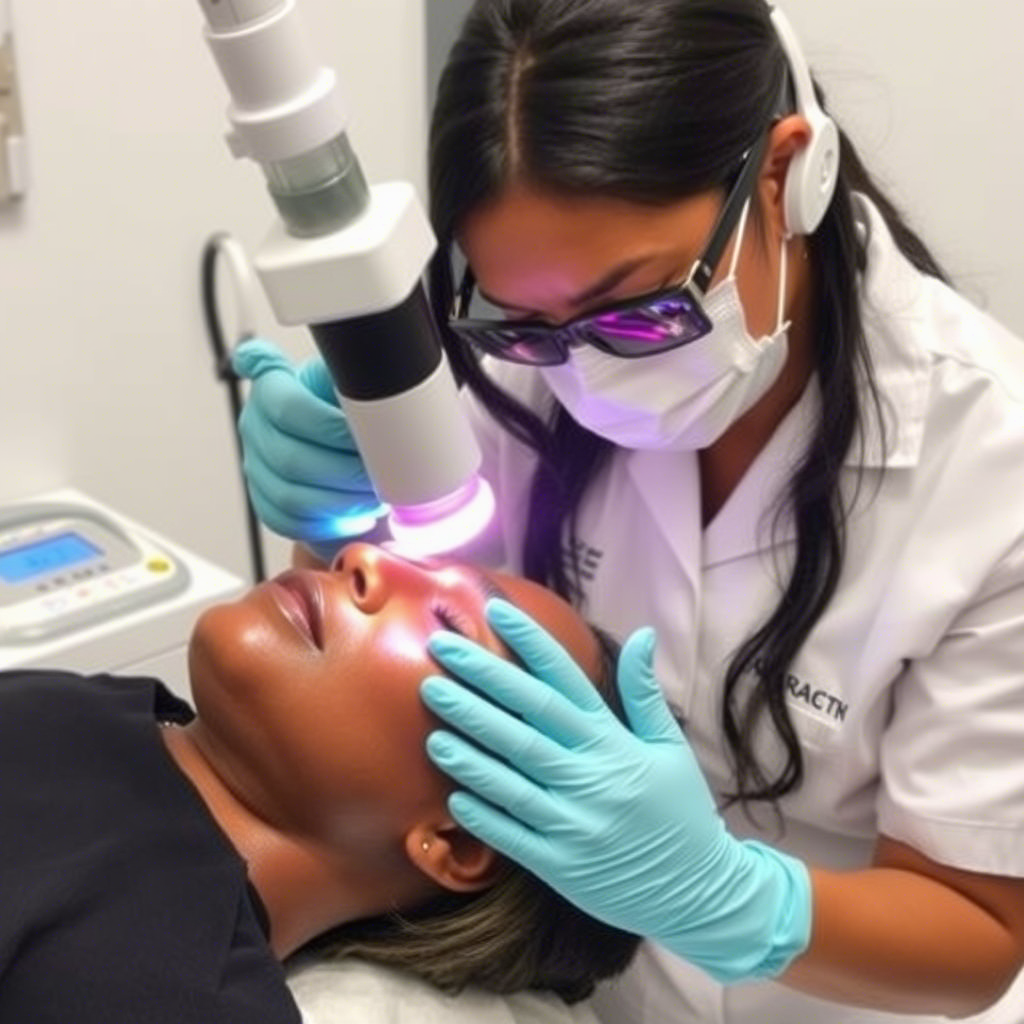
The New Era of Biostimulators: How Collagen Induction Is Replacing Traditional Fillers in 2026
By 2026, the aesthetic paradigm has shifted. Regenerative medicine is not a trend—it is the new standard. Across German clinics and international congresses, the conversation has moved from “filling volume” to “restoring biology.”
Beyond the “Volume-Only” Era
Traditional hyaluronic acid (HA) fillers have long been the workhorse of aesthetic medicine. They work by physical addition—injecting a gel to occupy space, providing immediate lift for cheeks, lips, and folds . The results are instant and predictable, but temporary, typically lasting 6 to 18 months .
But aging is not just about volume loss. By the third decade of life, the skin’s fibroblast activity declines, collagen production plummets, and the extracellular matrix (ECM) degrades . Traditional fillers address the symptom (deflation) without treating the cause (biological aging).
This is where next-generation biostimulatory injectables enter the picture—not just as an alternative, but as a fundamental upgrade to the aesthetic philosophy.
What Makes a Biostimulator “Regenerative”?
A biostimulator does not simply fill space. It triggers a biological cascade that reactivates the body’s own collagen-producing machinery . A peer-reviewed study published in June 2026 in Cosmetics (MDPI) clarifies that these agents—including PLLA, CaHA, PDRN, and PCL—do more than “increase collagen”; they modulate fibroblast activity, remodel the ECM, and promote progressive tissue regeneration .
This distinction is critical for patient education: “This is a medical procedure that reactivates your skin’s regenerative factory—the fibroblast” .
The Key Players in 2026
1. Poly-L-Lactic Acid (PLLA): The Slow-Burn Scaffold
PLLA (the active ingredient in Sculptra®) acts as a biological scaffold. The irregular microspheres trigger a controlled foreign-body response, stimulating fibroblasts to lay down new collagen around them over several weeks . Results are gradual and cumulative—typically requiring multiple sessions over months—but can last two years or more . This makes PLLA particularly suited for restoring diffuse volume loss and improving overall skin quality across the face, neck, and décolletage .
2. Calcium Hydroxylapatite (CaHA): The Hybrid Approach
Radiesse® (CaHA) offers a dual mechanism: an immediate lift from its gel carrier plus a long-term collagen-stimulating effect from its smooth CaHA microspheres . Clinically, CaHA can provide structural support in the jawline and cheeks while progressively improving skin firmness and elasticity . This hybrid model is often preferred for patients who want some instant gratification along with regenerative benefits .
3. PDRN/Polynucleotides: The Cellular Repair Pathway
Polynucleotides (PDRN/PN) operate through a distinct receptor-mediated pathway. Derived from purified DNA fragments, PDRN activates adenosine A2A receptors in dermal tissue, initiating an anti-inflammatory cascade that promotes fibroblast proliferation, neovascularisation, and tissue repair . Unlike PLLA or CaHA, PDRN acts primarily on skin quality—improving hydration, texture, and fine-line density rather than providing structural volume .
How German Clinics Are Leading the Shift
Germany’s strict medical regulatory framework has positioned its clinics at the forefront of this regenerative wave. Specialist dermatology centres—such as Dermatologikum Hamburg—are incorporating biostimulators into their core injectable offerings, administered by medically qualified dermatologists rather than paramedical staff .
The trend reflects broader observations from the Aesthetic & Anti-Aging Medicine World Congress (AMWC) in Monaco, where experts noted that aesthetic medicine is “moving away from quick corrections and towards a deeper, regenerative understanding of aging” . The term heard most often at the 2026 congress? “The Undetectable Era” —where results appear natural, harmonious, and, crucially, undetectable .
German clinics are also increasingly combining biostimulators with traditional fillers in “liquid facelift” protocols . This holistic approach uses HA fillers for precision contouring where immediate volume is needed, while deploying biostimulators for global skin quality improvement and longer-term structural support .
Safety, Duration, and Patient Selection
Biostimulators are not without their considerations. Unlike HA fillers, most are not reversible, and they require a different mindset from both patient and practitioner .
- Patience: Results develop over 8–12 weeks, not minutes.
- Multiple Sessions: Fibroblast reactivation is cumulative; 2–3 sessions are typically required for optimal outcomes.
- Longevity: Results often last 2+ years—significantly longer than most HA fillers .
- Suitability: Not all areas are suitable; biostimulators are generally avoided in lips and periocular regions .
The cost-per-year calculation often favours biostimulators despite higher upfront costs, as their extended duration can make them economically comparable or superior to fillers requiring frequent touch-ups .
The Bottom Line: Function Before Volume
By 2026, the aesthetic industry has matured beyond a one-size-fits-all approach. The new mantra is “function before volume”—prioritising biological restoration over artificial filling.
Biostimulators do not replace traditional fillers; they complement them within a comprehensive, layered treatment strategy. The future lies not in choosing one over the other, but in strategic combination: using fillers for structural foundation where needed, and biostimulators to rebuild the skin’s own regenerative capacity across the whole face.
As one German clinic puts it: “Biostimulatoren sind das Herzstück dieser Entwicklung. Sie bieten eine Lösung für Patienten, die keine künstliche Veränderung wünschen, sondern die jugendliche Spannkraft ihrer eigenen Haut reaktivieren möchten” .
The era of “filling” is over. The era of “restoring” has begun.
Disclaimer: This blog is for informational purposes only and does not constitute medical advice. Always consult a qualified medical practitioner for personalised treatment recommendations.