
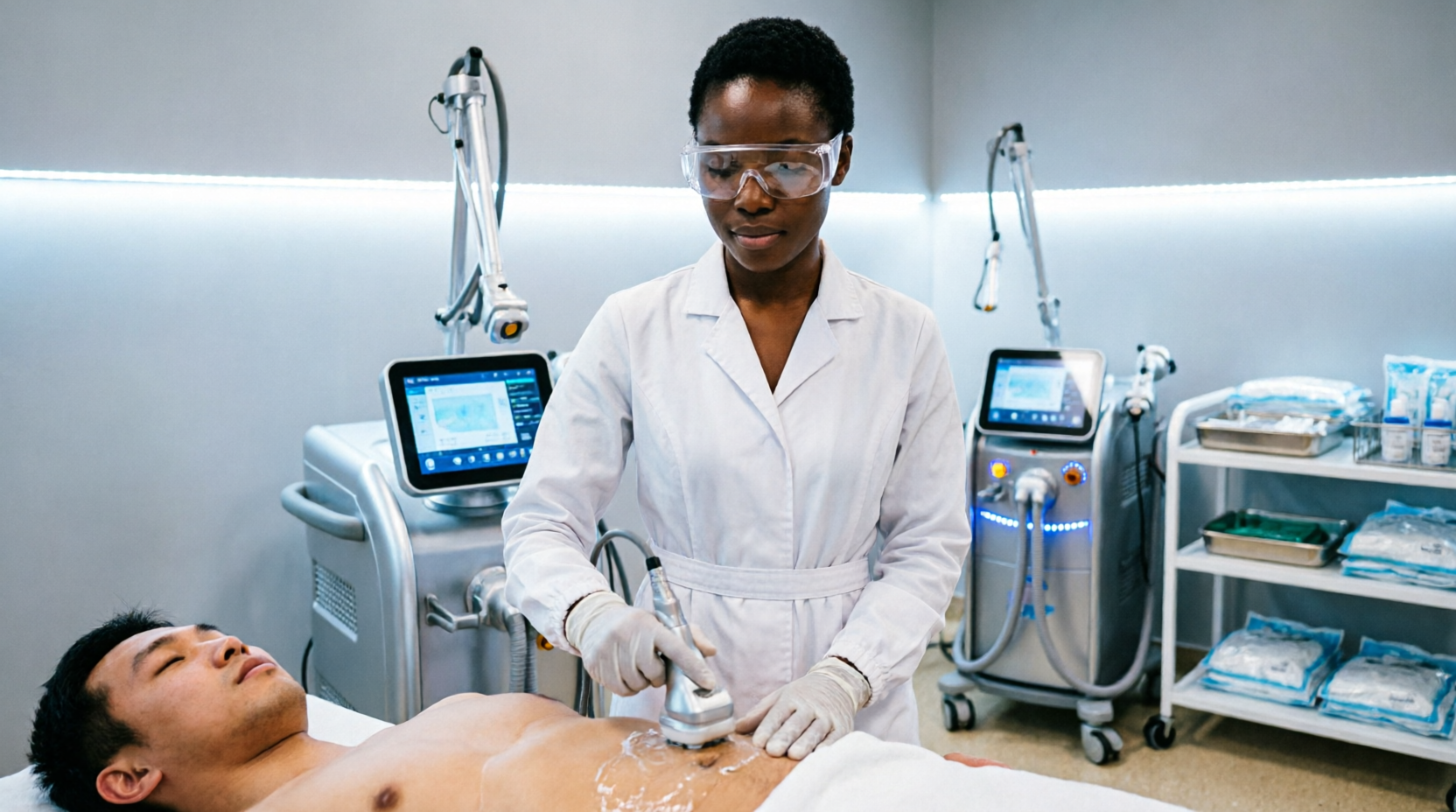
Sun Damage Decoded: A Dermatologist’s Guide to Repairing UV-Aged Skin After Summer
The tan fades. The glow dims. And beneath the surface, the cellular aftermath of summer lingers long after your last beach day. As the 2026 post-summer season settles in, dermatologists across Germany are seeing the familiar uptick in consultations—not for sunburn, but for the quieter, cumulative damage that UV radiation leaves behind: uneven pigmentation, textural roughness, and the telltale signs of photoaging.
This is your evidence-based roadmap to understanding, treating, and reversing sun-damaged skin.
The Cellular Toll: Why Sun Exposure Is More Than Skin Deep
UV radiation—particularly UVA wavelengths—penetrates deep into the dermis, where it triggers a cascade of biochemical damage that accelerates visible aging by decades . The mechanism is precise and devastating: UV exposure activates matrix metalloproteinases (MMPs), enzymes that systematically break down collagen networks. Simultaneously, it suppresses new collagen production by fibroblasts—by up to 80% after just a single moderate exposure .
This is not surface-level dryness. This is a fundamental disruption of your skin’s structural integrity.
The damage extends beyond collagen: UV radiation disrupts melanocyte activity (leading to irregular pigmentation), depletes protective antioxidants like glutathione, and damages DNA directly—increasing the long-term risk of skin cancers . By the time you notice uneven tone or fine lines, years of cumulative damage have already altered your skin at the molecular level.
Clinical Note: The timing of post-summer treatment is critical. Many dermatologists refer to autumn as “laser season” because patients are least sun-exposed, allowing for safer, more effective professional interventions .
Professional Repair Protocols: From Peels to Lasers
For patients seeking meaningful reversal of photodamage, at-home skincare alone is rarely sufficient. In-office procedures offer the depth and precision needed to remodel the dermis and clear persistent pigmentation.
Chemical Peels: Controlled Resurfacing
Chemical peels work by creating controlled injury that triggers regeneration .
- Superficial peels (e.g., glycolic acid, salicylic acid) promote epidermal turnover, smoothing rough texture and improving mild dyspigmentation .
- Medium-depth peels (e.g., 35% trichloroacetic acid, TCA) reach the papillary dermis, effectively treating fine lines, sunspots, and more pronounced pigmentation with 3–5 days of downtime .
- Deep peels (50% TCA, phenol) reach the reticular dermis for extensive collagen regeneration, though these carry higher risks and longer recovery .
Laser and Light-Based Therapies
Laser resurfacing utilises thermal injury followed by TGF-β-mediated neocollagenesis—essentially, triggering your skin to build new, healthier tissue .
- Ablative lasers (CO₂, Er:YAG) remove the epidermis and dermis, offering the most dramatic results for advanced photoaging but requiring longer recovery (fractional CO₂ typically needs 5–7 days) .
- Non-ablative lasers (Nd:YAG, Er:Glass) induce thermal injury while preserving the surface, providing gradual improvement with minimal downtime .
- IPL/BBL treatments target pigmentation at deeper levels, breaking up discoloration effectively—but require careful timing. Patients who are still tanned can experience blistering or irregular hypopigmentation .
Emerging Regenerative Technologies
Recent innovations include exosome-augmented microneedling and low-fluence picosecond lasers, which offer enhanced pigment clearance with improved safety profiles, particularly for darker skin types . These technologies address the dual challenges of pigmentation and photoaging simultaneously, reflecting dermatology’s shift toward combination-based strategies .
Topical Actives: The Evidence Hierarchy
While in-office procedures address deeper damage, topical agents are the cornerstone of sustained repair and maintenance. The evidence base for these agents is robust, with network meta-analyses clarifying which ingredients deliver meaningful results.
Retinoids: The Gold Standard
Retinoids are the most evidence-supported class for reversing photodamage. A 2025 network meta-analysis published in Scientific Reports confirmed that isotretinoin, tretinoin, and retinol are effective for fine wrinkles, while tazarotene showed a significant advantage in treating coarse wrinkles .
In clinical practice, prescription tretinoin (0.025–0.05%) remains the most rigorously studied option. Most patients see early improvements in texture and tone within 3–4 months, with significant reductions in hyperpigmentation and wrinkles taking 6–12 months of consistent use . The benefit is dose-dependent and duration-dependent—discontinuation leads to gradual loss of effect .
Vitamin C and Antioxidants
Topical antioxidants are essential for neutralising the reactive oxygen species (ROS) that drive photoaging . L-ascorbic acid (10–15%) provides photoprotection and supports collagen synthesis. Newer formulations, including thiamidol and melasyl, offer targeted tyrosinase inhibition with comparable efficacy to hydroquinone in some trials .
Emerging Actives: PDRN
Polydeoxyribonucleotide (PDRN) has emerged as a novel topical approach for photodamaged skin. A 2026 randomised controlled trial demonstrated that 0.1% PDRN-850K eye cream achieved approximately two-fold greater improvements in periocular wrinkles, dermal thickness, and density compared to 0.1% retinol over 28 days . Mechanistically, PDRN activates PI3K-Akt and TGF-β/Smad pathways in basal fibroblasts, promoting ECM repair at the cellular level . While promising, larger-scale human trials are still needed for broader recommendation .
The Pigmentation Challenge: Melasma and Beyond
Melasma—a chronic, relapsing hyperpigmentation disorder—remains one of the most challenging photoaging-related conditions. Its pathogenesis involves hyperactive melanocytes, UV-induced oxidative stress, dermal inflammation, and fibroblast senescence .
Treatment is evolving toward multi-target strategies that address pigmentation, inflammation, and photoaging simultaneously . Innovations include:
- Non-hydroquinone brighteners (thiamidol, melasyl)
- Topical and oral tranexamic acid, which inhibits plasmin-induced tyrosinase activity
- Procedural advances such as fractional CO₂ laser-assisted drug delivery and low-fluence picosecond lasers
The psychosocial impact of melasma is substantial—especially among women with darker skin types—and treatment durability remains limited by high relapse rates and risk of post-inflammatory hyperpigmentation .
The Bottom Line: Repair Requires a Layered Approach
Sun damage is not reversible in the sense of erasing all molecular injury—UV-induced DNA damage accumulates over a lifetime, and some changes are permanent . However, the visible manifestations of photoaging can be meaningfully improved through strategic combination of professional procedures and evidence-based topicals.
The consensus approach, as outlined in recent Delphi-based guidelines, emphasises:
- Primary prevention (daily broad-spectrum SPF 30+)
- Stratified treatment pathways based on photoaging severity
- Combination therapy—topicals plus in-office procedures—for optimal outcomes
For the typical post-summer patient, a protocol might include: a medium-depth chemical peel or IPL session in early autumn, followed by prescription tretinoin initiation and daily vitamin C + SPF for maintenance. Regular dermatological checks remain essential, as sun damage also increases skin cancer risk .
The window for repair is now—before the next summer sun arrives.
Disclaimer: This article is for informational purposes only and does not constitute medical advice. Always consult a qualified dermatologist for personalised treatment recommendations.