
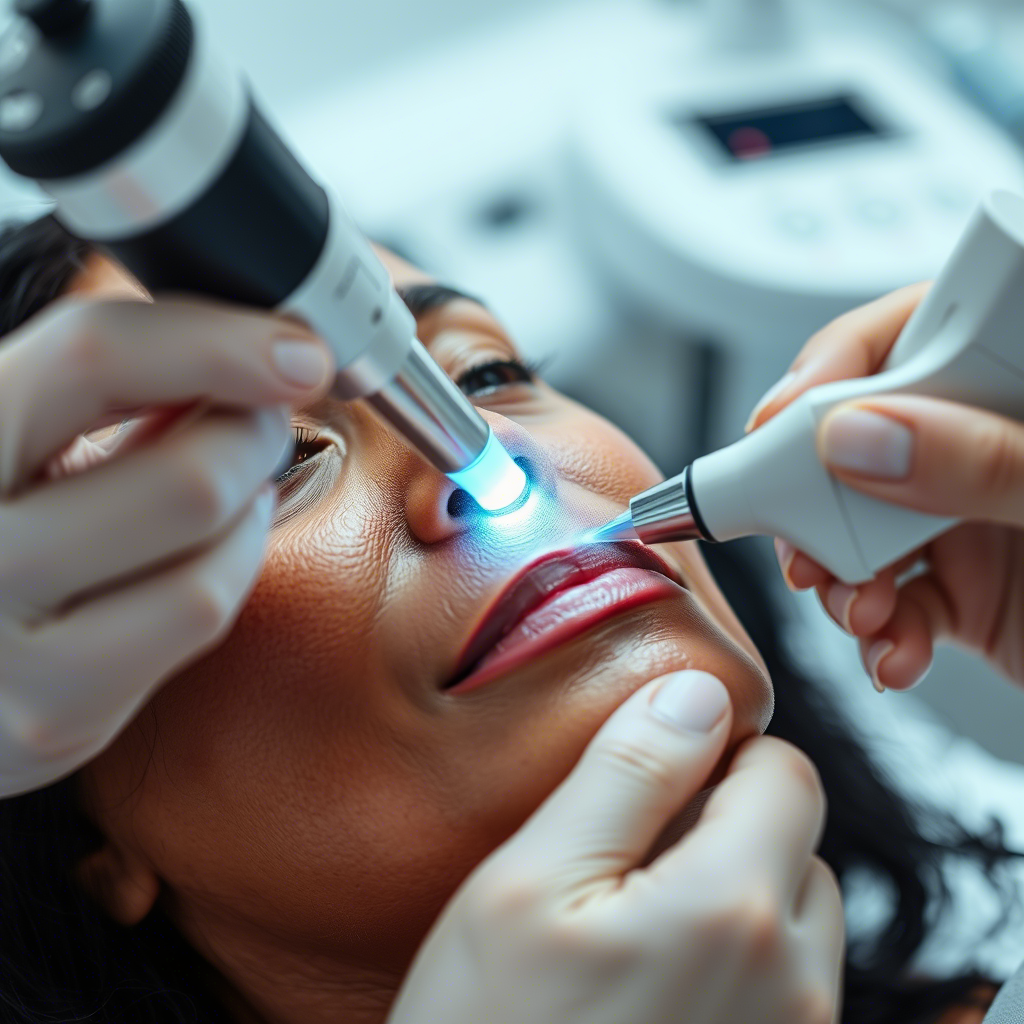
Energy-Based Devices in 2026: Comparing Ultrasound, Radiofrequency & Fractional Lasers for Non-Surgical Lifting
An evidence-based guide to HIFU, RF microneedling, and fractional lasers—indications, downtime, and what results you can realistically expect.
The demand for non-surgical facial rejuvenation has never been higher. In 2026, patients are increasingly seeking “lunchtime” procedures that offer meaningful improvement without the downtime or risks of a surgical facelift. Energy-based devices have risen to meet this demand, but with a crowded field of options—HIFU, RF microneedling, fractional CO₂, and erbium lasers—confusion is inevitable. This guide cuts through the marketing to provide a clear, evidence-based comparison.
The first and most important distinction to understand is that these technologies address different aspects of aging. As one practitioner explains, visible skin looseness has three primary causes: dermal collagen loss, weakening of the deeper SMAS (fascial) layer that supports facial soft tissue, and volume loss in fat compartments. Energy-based devices target the first two, but none effectively replaces lost volume. If volume loss is the primary concern, fillers or biostimulators are the appropriate treatment—not skin tightening .
Understanding the Three Main Modalities
1. High-Intensity Focused Ultrasound (HIFU)
HIFU delivers focused ultrasound energy to precise depths beneath the skin’s surface, notably targeting the SMAS layer at 4.5mm—the same anatomical layer addressed in a surgical facelift . By creating thermal coagulation points at this depth, HIFU stimulates tissue contraction and neocollagenesis, producing a lifting effect from the inside out. It does not break the skin surface, making it truly non-invasive.
2. Radiofrequency (RF) Microneedling
Combining mechanical injury with thermal energy, RF microneedling uses fine needles to deliver radiofrequency energy directly into the dermis at adjustable depths (typically 0.5mm to 8mm) . This creates controlled thermal injury at the needle tips, triggering a robust wound-healing cascade, neocollagenesis, and modest fat coagulation. Crucially, the epidermis is largely spared from thermal damage, which contributes to its safety profile in darker skin types .
3. Fractional Ablative Lasers (CO₂ and Erbium)
These devices take a fundamentally different approach: they vaporize columns of tissue (creating microscopic wounds) while leaving surrounding skin intact to facilitate rapid healing. This triggers deep dermal remodeling. Fractional CO₂ delivers the most aggressive and profound results for wrinkles, textural issues, and tightening, while fractional erbium offers more superficial resurfacing with faster recovery . Both target the epidermis and upper dermis rather than the SMAS layer.
Evidence-Based Comparison: Indications, Results, and Downtime
What the Evidence Shows About Efficacy
A 2026 systematic review compared energy-based devices to surgical facelifts and provided sobering context for patient expectations. The review found that while energy-based devices show moderate improvements—with 80-92% of patients experiencing some benefit—results typically last up to one year. In contrast, surgical rhytidectomy offers superior results lasting over seven years. Patient satisfaction was highest with surgery for moderate-to-severe laxity .
That said, the 2026 evidence remains positive for appropriate candidates:
- HIFU demonstrates a ~40% increase in dermal thickness and significant wrinkle reduction, with one study showing 85-92.5% patient satisfaction .
- RF Microneedling can deliver measurable dermal thickness improvement at 30 days (62% of patients reporting significant improvement vs. 15% for HIFU in one comparative study) .
- Fractional CO₂ remains the gold standard for patients with significant photodamage who can tolerate the recovery period .
Realistic Patient Expectations: Honest Truths
A facelift surgeon’s perspective offers critical insight for patients considering energy-based treatments . As energy-based devices become more common, surgeons are increasingly treating patients with prior energy-based procedures. While safe, cumulative effects on facial soft tissues merit consideration .
What You Should Know Before Treatment:
1. Address the Right Problem
Energy-based devices address laxity, not volume loss. A patient whose primary concern is sagging from volume depletion will be disappointed regardless of how well the tightening treatment is performed .
2. Expect Gradual Results
None of these technologies deliver immediate, dramatic lifting. Results unfold over months as collagen remodeling takes place .
3. Manage Your Timeline
If you have a major event in three weeks, plan accordingly. Most energy-based tightening requires months for full effect .
4. Multiple Sessions May Be Needed
While HIFU is often a single-treatment procedure (boosted every 12-18 months), RF microneedling typically requires a series of treatments to achieve desired outcomes .
5. Combination Therapy Is Common
Many practitioners now use combination approaches. For instance, HIFU for SMAS lifting combined with RF microneedling for skin texture, or fractional lasers after a course of RF treatments . Multiple procedures in one session (with appropriate anesthesia) may allow for higher energy settings and superior outcomes .
Final Verdict: Which One Is Right for You?
Choose HIFU if your primary concern is mid-to-lower face and neck laxity, you want zero downtime, and you prefer a single treatment approach .
Choose RF Microneedling if you have mild-to-moderate laxity with concurrent texture, pore, or scarring concerns, and can accept 2–5 days of social downtime .
Choose Fractional CO₂ if you have significant photoaging, deep wrinkles, or scarring, and are willing to commit to an aggressive recovery in exchange for the most dramatic non-surgical improvement .
Surgery remains the only option for patients with moderate-to-severe laxity seeking dramatic, durable results .
Ultimately, the “best” treatment is the one matched to your specific anatomy, skin quality, and lifestyle priorities. A thoughtful consultation with an experienced provider—who understands your skin type, downtime tolerance, and goals—remains essential. The technology itself is only as effective as the person wielding it.
Disclaimer: This information is for educational purposes only and does not constitute medical advice. Always consult a qualified healthcare provider for personalized recommendations.