
Understanding the Skin Barrier: Why It’s More Crucial for Anti-Aging Than Expensive Creams
We have all been guilty of it. We scroll through social media, see a celebrity endorsing a $500 night cream, and think, “If I just buy that, my wrinkles will disappear.”
We spend hundreds—sometimes thousands—of dollars on retinols, vitamin C serums, and peptides. While these ingredients are fantastic, they are essentially useless if you are ignoring the foundation of your skin’s health: The Skin Barrier.
Here is the hard truth that the beauty industry doesn’t always want you to know: A healthy, intact skin barrier does more for anti-aging than the most expensive cream on the market.
If your barrier is compromised, you aren’t just dealing with dryness; you are actively accelerating the aging process. Let’s dive into why this microscopic shield is the secret to a youthful complexion.
What Exactly is the Skin Barrier?
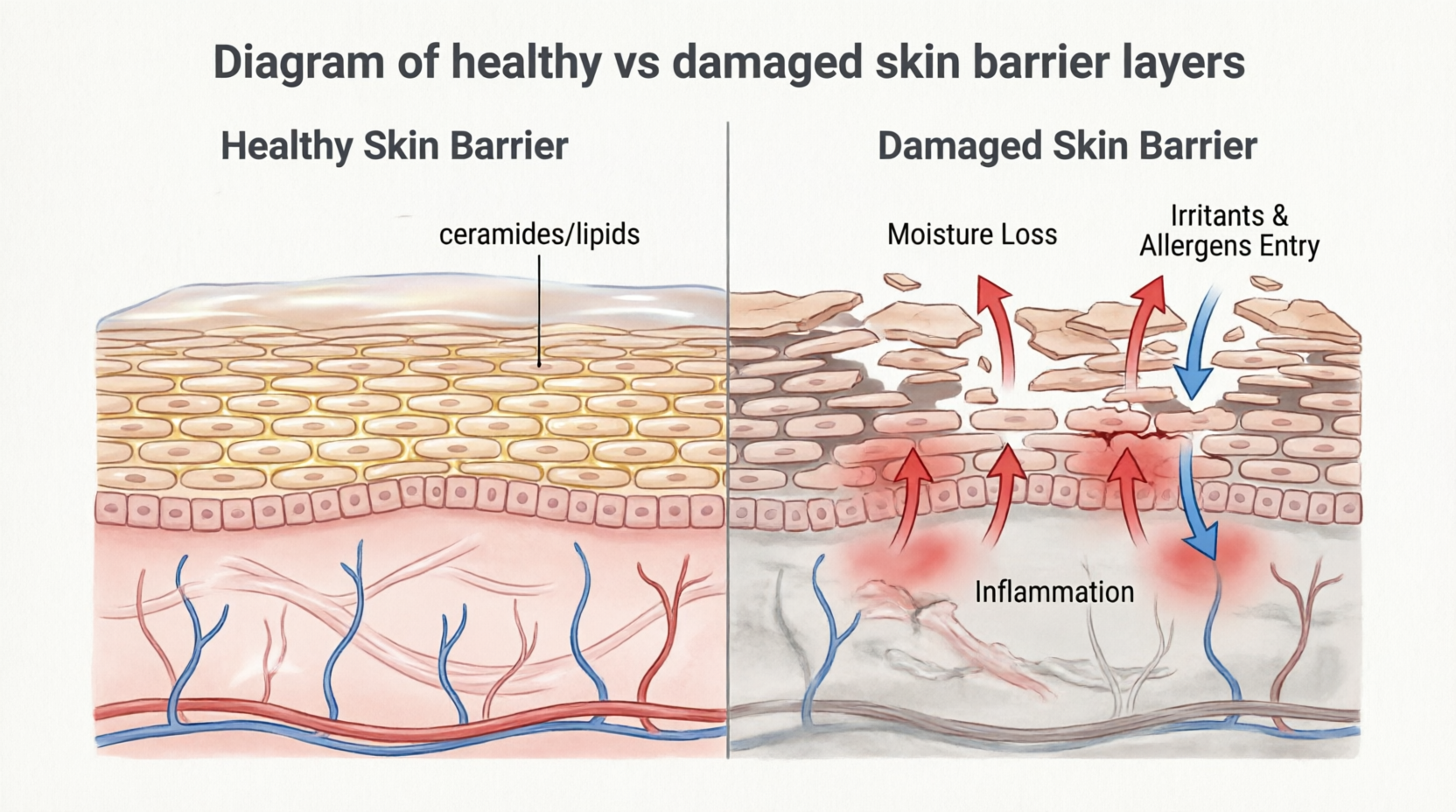
Think of the skin barrier (also known as the stratum corneum) as a brick wall.
- The Bricks: These are your skin cells (corneocytes).
- The Mortar: This is the lipid matrix—made up of ceramides, cholesterol, and fatty acids—that holds the bricks together.
This “wall” has two vital jobs:
- Keep the bad stuff out: It blocks environmental aggressors like pollution, UV rays, and bacteria.
- Keep the good stuff in: It prevents water from evaporating out of your body (Transepidermal Water Loss or TEWL).
When this wall is thick and sturdy, your skin looks plump, smooth, and radiant. When the mortar crumbles, the wall collapses.
The Hidden Link Between a Damaged Barrier and Aging
Most people think aging is purely genetic or caused by sun exposure (photoaging). While UV damage is a major factor, chronic inflammation is the silent accelerator of wrinkles.
When your skin barrier is compromised:
- Water Escapes: Dehydrated skin cells shrivel up, making fine lines look deeper and more pronounced.
- Irritants Enter: Pollution and bacteria sneak in, triggering your immune system. This leads to low-grade, chronic inflammation.
- Collagen Breakdown: That inflammation produces enzymes (MMPs) that literally break down your collagen and elastin.
The Result: You lose volume and elasticity faster than you would if your barrier were intact. You could be using the most potent retinol in the world, but if your barrier is broken, that retinol will cause irritation rather than rejuvenation.
Signs Your Skin Barrier is Damaged
You cannot fix what you don’t know is broken. Ask yourself if you are experiencing any of these symptoms:
- Tightness: Your skin feels like it’s stretching after you wash it.
- Flakiness/Peeling: Makeup clings to dry patches.
- Redness/Inflammation: A persistent “ruddy” complexion.
- Stinging: Your moisturizer or sunscreen suddenly burns when applied.
- Increased Breakouts: A damaged barrier leads to an overgrowth of C. acnes bacteria.
If you checked off more than two, your “anti-aging” routine might actually be doing more harm than good.
How to Repair Your Barrier (The Real Anti-Aging Routine)
Here is the good news: You don’t need a facelift to fix this. You need to switch your focus from “active ingredients” to “barrier repair.”
1. Simplify Your Routine
If your barrier is damaged, stop exfoliating immediately. Put away the glycolic acid, salicylic acid, and strong retinoids for 2–4 weeks. You need to build the wall back up before you can renovate the house.
2. Seek the “Golden Ratio” of Lipids
Your skin doesn’t just need water; it needs lipids to hold that water in. Look for moisturizers that contain the “Golden Ratio” of Ceramides, Cholesterol, and Fatty Acids (ideally in a 3:1:1 ratio). This is what dermatologists call “physiological lipid supplementation,” and it is the closest thing to an anti-aging miracle we have.
3. Use Occlusives at Night
While serums penetrate, occlusives seal. Ingredients like Squalane, Shea Butter, or Petrolatum (Vaseline) form a protective film over the skin, reducing TEWL by up to 99%. Applying a thin layer of an occlusive at the end of your routine is like putting a raincoat over your moisturizer.
4. Protect with SPF (Mineral is Best)
When your barrier is broken, chemical sunscreens can penetrate too deeply and cause irritation. Switch to a Zinc Oxide or Titanium Dioxide sunscreen. It sits on top of the skin, reflecting UV rays without causing chemical stress to your compromised wall.
The Bottom Line
Expensive creams often contain “fragrance” and “essential oils” that actually irritate a weakened barrier. The most effective anti-aging treatment isn’t the most expensive; it’s the most nourishing.
Stop treating the wrinkles and start treating the skin.
By focusing on healing your skin barrier, you are doing three things:
- Reducing inflammation (the root cause of aging).
- Plumping the skin to diminish fine lines.
- Fortifying your skin so it can actually tolerate the anti-aging actives you want to use later.
The fountain of youth doesn’t come in a gold-plated jar. It comes from a healthy, resilient lipid barrier. Feed your “bricks” and “mortar,” and the glow will follow.
Do you struggle with redness or sensitivity? Let me know in the comments below what your biggest skin barrier challenge is!