
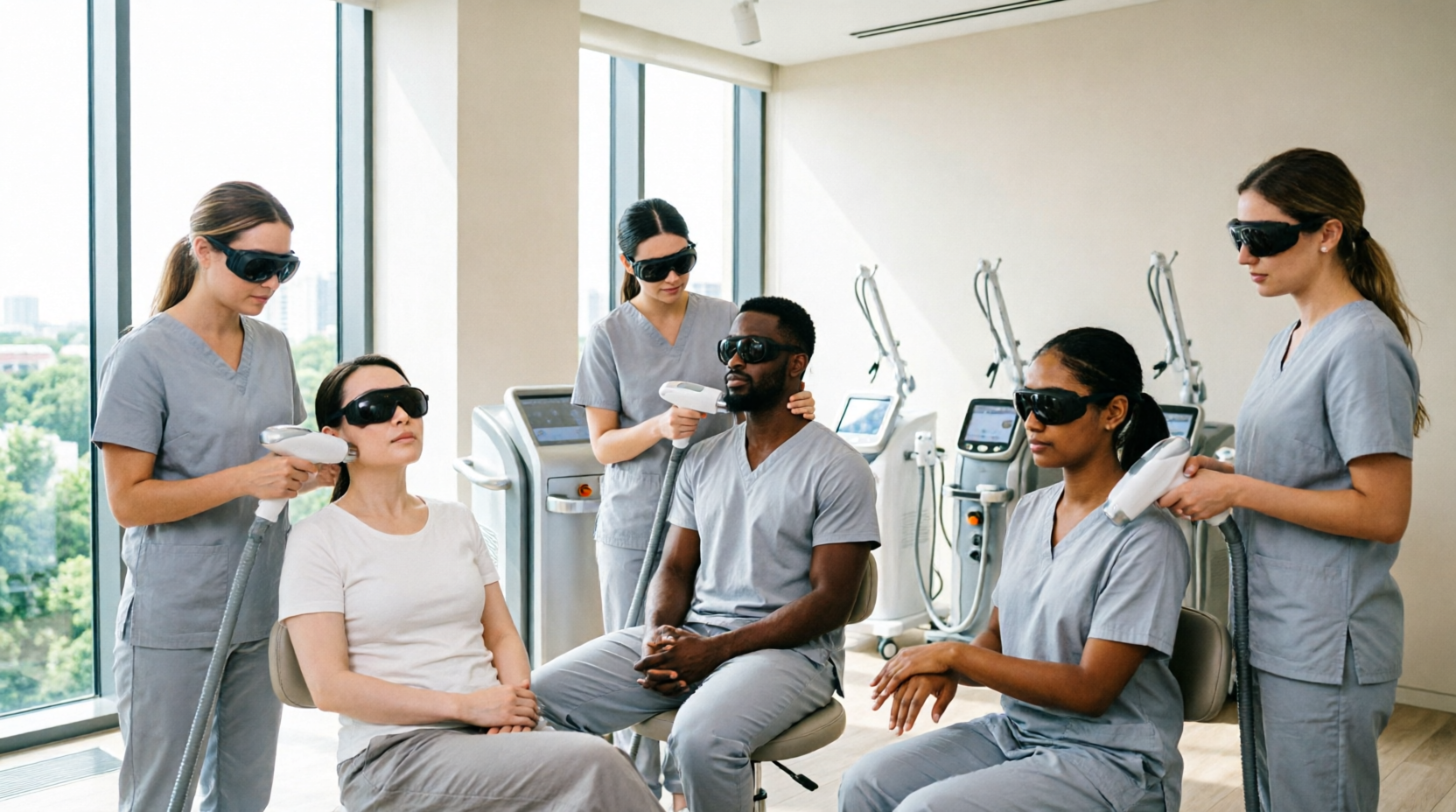
From Lasers to Leadership: Mapping Your Career Path from Junior Tech to Clinic Director – aesthetics career path
If you entered the medical aesthetics field because you love helping patients gain confidence, you already have the “why.” But what about the where?
The beauty of a career in aesthetics is that it isn’t a dead end; it is a pyramid. You can start by holding a laser handpiece and end up owning the P&L sheet.
But how do you actually move from the treatment room to the corner office? We spoke with seasoned clinic directors and successful alumni to map out the five distinct levels of the aesthetics career path.
Level 1: The Foundation (Junior Aesthetician / Laser Technician)
The Role: You are the workhorse of the clinic. You master the basics: facials, hair removal, skin peels, and patient intake. Your goal here is speed + safety.
- Salary Range: 35,000–45,000 (Entry-level)
- Core Skills: Skin anatomy, sanitation protocols, consultative listening.
- Upskilling Required: Certification in Laser Safety (CPL) or Basic Chemical Peels.
Instructor Insight: “The biggest mistake juniors make is trying to do advanced injectables before they can master a basic HydraFacial,” says Sarah J., Clinical Instructor. “I look for technicians who can handle patient anxiety during a laser treatment. If you can soothe a nervous patient, you can eventually sell them a surgical package.”
Level 2: The Specialist (Lead Aesthetician / Injector)
The Role: You move from generalist to specialist. You are likely adding Neurotoxins (Botox), dermal fillers, or advanced body contouring to your resume. You build a personal “patient following.”
- Salary Range: 55,000–85,000 (Base + Commission)
- Core Skills: Injection techniques, complication management, product upselling.
- Upskilling Required: Injectable Certification (toxin/filler) and Advanced CPR/AED.
Level 3: The Mentor (Senior Clinician / Team Lead)
The Role: You still treat patients, but you also train the juniors. You are the quality control officer for the clinic. This is the pivot point from “worker” to “leader.”
- Salary Range: 80,000–110,000
- Core Skills: Delegation, conflict resolution, auditing treatment plans.
- Upskilling Required: Train-the-Trainer certification; Business communication.
Level 4: The Operator (Clinic Manager)
The Role: You stop treating patients (mostly). Your focus shifts to KPIs: Average Ticket Price, Rebooking Rate, and Inventory Shrinkage. You manage schedules, payroll, and hiring.
- Salary Range: 90,000–130,000 + Bonuses
- Core Skills: Inventory management (e.g., Zenoti/Mindbody software), HR compliance, P&L literacy.
- Upskilling Required: Certificate in Medical Office Management (CMOM) or Lean Six Sigma (White/Yellow belt).
Level 5: The Visionary (Regional Director / Clinic Owner)
The Role: You own the strategy. You decide whether to open a new location, which laser to buy, and how to market to high-net-worth clients.
- Salary Range: 150,000–250,000+ (Equity dependent)
- Core Skills: Strategic marketing, real estate negotiation, leadership psychology.
The “Fast Track” Leadership Map
If you want to skip the line to Clinic Director, you cannot just be good with a needle. You must be good with people.
| Role | Key Skill to Master | Recommended Certification |
|---|---|---|
| Junior Tech | Safety & Dermaplaning | Basic Aesthetics Diploma |
| Senior Tech | Consult-to-inject conversion | Advanced Injectables Course |
| Clinic Manager | Patient retention cycles | MedSpa Management Certification |
| Director | Hiring & Firing competency | Leadership EQ Course |
Alumni Success Story: From Receptionist to Regional Director
Meet “Jenna R.” (Alumni Class of 2018)
Jenna started as a front-desk scheduler at a small medspa. She had no aesthetic license, but she had a relentless curiosity.
“I asked the lead injector to teach me about numbing creams,” Jenna recalls. “Within a year, I got my esthetician license. Two years later, my injector certification.”
By 2022, Jenna was managing that same spa. In 2024, she was recruited to open a new flagship location for a national chain as their Regional Clinical Director.
Her advice? “Don’t look at the salary cap. Look at the skill gap. Every time a manager complains about a problem (bad scheduling, low sales), I learned how to solve it for them. Eventually, they realized they couldn’t run the place without me.”
The Bottom Line
The medical aesthetics industry is growing at 15% annually. But machines don’t run themselves, and clinics don’t manage themselves.
Whether you want to be the best injector in your state or the CEO of a multi-location brand, there is a clear aesthetics career path waiting for you. It requires continuous learning, a pivot from technical skill to emotional intelligence, and the bravery to step away from the treatment chair.