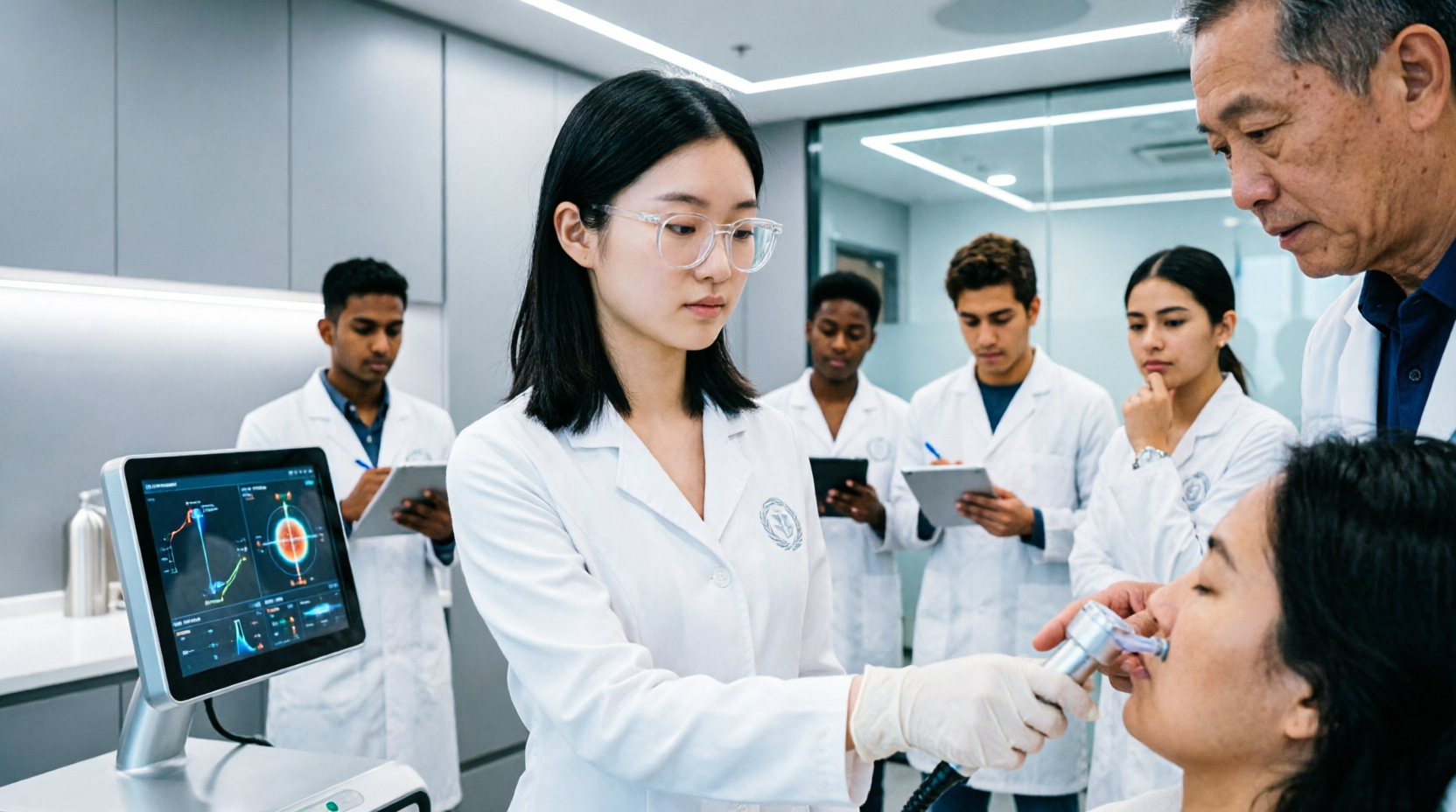
Areola-Rekonstruktion – Medical Permanent Makeup (PMU) Certification

Course Outline: Areola-Rekonstruktion (Medizinisches PMU)
Course Title: Areola-Rekonstruktion – Medical Permanent Makeup (PMU) Certification
Duration: 2 days (16–18 hours total) Format: Theory + Live demonstration + Hands-on practice on synthetic skin + Model work (optional day 3)
Prerequisites:
-
Basic PMU / tattooing experience (or completed foundational PMU course)
-
Basic knowledge of skin anatomy and hygiene protocols
-
For estheticians without tattoo experience: foundation module required beforehand
Certification Granted: Certified Areola Reconstruction Specialist (Medical PMU)
Day 1 – Theory & Foundations (8–9 hours)
Module 1: Introduction to Medical PMU & Areola Reconstruction (1 hour)
Learning Objectives:
-
Understand the psychological and emotional importance of areola reconstruction for mastectomy patients.
-
Differentiate between aesthetic PMU and medical/paramedical PMU.
-
Identify the legal and ethical responsibilities of the practitioner.
Topics Covered:
-
What is areola reconstruction? (Surgical vs. tattoo-based methods)
-
The role of PMU in post-mastectomy rehabilitation
-
Patient profiles: breast cancer survivors, gender-affirming surgery, breast reduction scars
-
Scope of practice & legal requirements (Germany/EU-specific)
-
Working with medical teams (oncologists, plastic surgeons, psychologists)
Key Terms: Mastektomie, Brustwarzen-Rekonstruktion, paramedikales Tätowieren, Aufklärungsgespräch
Module 2: Anatomy & Physiology of the Nipple-Areola Complex (1.5 hours)
Learning Objectives:
-
Understand the natural anatomy of the areola and nipple.
-
Recognize how surgery alters anatomy and skin condition.
-
Identify scar tissue types and their response to tattooing.
Topics Covered:
-
Natural areola: size, shape, color, texture, and Montgomery glands
-
Changes after mastectomy, lumpectomy, breast reduction
-
Skin grafts and flap reconstruction – how they affect tattooing
-
Scar tissue: normotrophic, atrophic, hypertrophic, keloid
-
Nerve damage and sensation changes (patient communication)
Module 3: Color Theory & Pigment Selection for Areola Reconstruction (2 hours)
Learning Objectives:
-
Mix natural-looking areola colors for different skin tones.
-
Understand how scar tissue absorbs pigment differently than healthy skin.
-
Perform color matching for unilateral vs. bilateral reconstruction.
Topics Covered:
-
Skin undertones (cool, warm, neutral, olive)
-
Pigment families for areola work: iron oxides, organic vs. inorganic
-
Creating depth: base color, mid-tone, highlight (3D effect)
-
Correcting color shifts: treating bluish or reddish scars
-
Pigment selection for Fitzpatrick skin types I–VI
-
Color fading and long-term stability in scar tissue
Practical Exercises:
-
Color mixing practice on paper / pigment cards
-
Matching a natural areola photo to pigment formula
Module 4: 2D vs. 3D Areola Tattooing Techniques (2 hours)
Learning Objectives:
-
Differentiate between flat (2D) and realistic (3D) areola techniques.
-
Master the visual elements that create a natural nipple-areola complex.
Topics Covered:
-
2D technique: solid color fill, suitable for flat scars or low-demand cases
-
3D technique: gradients, stippling, and radial shading
-
Creating the illusion of a protruding nipple (even when flat)
-
Highlight and shadow placement for depth
-
Reproducing Montgomery tubercles
-
Nipple reconstruction via tattooing (non-surgical 3D nipple)
Visual Aids:
-
Before/after gallery
-
Step-by-step 3D shading diagrams
Module 5: Patient Consultation & Documentation (1 hour)
Learning Objectives:
-
Conduct a sensitive, professional consultation with breast cancer patients.
-
Obtain informed consent specific to areola reconstruction.
-
Document medical history and contraindications.
Topics Covered:
-
Consultation structure: psychological readiness, expectations, limitations
-
Aesthetic release forms (coordination with surgeon – waiting period after surgery)
-
Contraindications: active chemotherapy/radiation, uncontrolled diabetes, keloid tendency, blood thinners
-
Photography protocols (before, during healing, after)
-
Pricing and package structures for areola reconstruction
Downloadable Templates:
-
Aesthetic intake form
-
Informed consent (areola specific)
-
Pre- and post-procedure photography consent
Module 6: Hygiene, Sterilization & Safety Protocols (1.5 hours)
Learning Objectives:
-
Apply medical-grade sterilization protocols.
-
Prevent cross-contamination and infection in scar tissue.
Topics Covered:
-
Medical vs. cosmetic hygiene standards (higher for scar tissue)
-
Autoclave sterilization for reusable tools
-
Single-use needles, cartridges, grips, pigment caps
-
Skin preparation for scar tissue (gentle but thorough)
-
Disposal of biohazard waste
-
Practitioner personal protective equipment (PPE): gloves, mask, gown, eye protection
-
Emergency protocol: allergic reaction, fainting, bleeding
Day 2 – Practical Application & Business Integration (8–9 hours)
Module 7: Step-by-Step Areola Tattooing Protocol (3 hours)
Learning Objectives:
-
Perform a complete areola reconstruction procedure from start to finish.
-
Adapt technique for different scar types and skin conditions.
Topics Covered (Step-by-Step):
| Step | Action | Details |
|---|---|---|
| 1 | Patient preparation | Consent review, photo, skin cleaning, topical anesthetic |
| 2 | Numbing | 20–30 minutes, medical-grade numbing cream |
| 3 | Stencil design | Custom stencil: size, position (matching healthy side if unilateral) |
| 4 | Pigment selection | Mix base color matching patient's natural or desired areola |
| 5 | Needle selection | Magnum shader for fill, round liner for details (e.g., 3RL, 5M) |
| 6 | Application – base layer | Light, even fill; low speed, gentle hand |
| 7 | Application – 3D shading | Radial gradient from edge to center; stippling |
| 8 | Highlighting | Add lighter pigment to center or nipple projection |
| 9 | Post-procedure | Clean, apply aftercare ointment, take after-photo |
Live Demonstration: Instructor performs full areola reconstruction on synthetic skin or model (if available).
Module 8: Hands-On Practice – Synthetic Skin (3 hours)
Learning Objectives:
-
Practice all techniques on synthetic skin before working on a live model.
-
Receive individual feedback and correction.
Practical Exercises:
| Exercise | Duration | Focus |
|---|---|---|
| 1 – Color mixing | 30 min | Matching a reference photo |
| 2 – Stencil placement | 30 min | Positioning on curved synthetic surface |
| 3 – 2D fill technique | 45 min | Even saturation, no overworking |
| 4 – 3D shading | 60 min | Radial gradient, stippling |
| 5 – Full areola (2D + 3D) | 60 min | Complete procedure from start to finish |
Instructor Feedback: Individual review of each practice piece with written notes.
Module 9: Managing Complications & Side Effects (1 hour)
Learning Objectives:
-
Recognize and manage common side effects of areola tattooing.
-
Respond appropriately to rare complications.
Topics Covered:
-
Normal healing vs. complications (redness, swelling, scabbing)
-
Infection signs: increasing redness, pus, fever
-
Allergic reactions to pigments or numbing agents
-
Pigment migration or blowout in scar tissue
-
Color shifts (grey, blue, green) – causes and correction
-
Patient aftercare instructions (written template)
-
Touch-up protocol: when and how (typically 6–8 weeks post)
Module 10: Business Integration for Medical PMU (1 hour)
Learning Objectives:
-
Price areola reconstruction services profitably.
-
Market to medical partners and breast cancer support groups.
-
Understand insurance and reimbursement (where applicable).
Topics Covered:
-
Pricing models: per session vs. package (2 sessions: initial + touch-up)
-
Average pricing: €400–€800 per areola (unilateral); €600–€1,200 (bilateral)
-
Cost calculation: disposables, pigments, time, overhead
-
Working with plastic surgeons: referral partnerships
-
Marketing to patients: website content, brochures for oncology clinics
-
Sensitivity in marketing: respectful language, patient testimonials (with consent)
-
Insurance billing: Germany (private insurance may cover parts), other EU countries
Module 11: Final Assessment & Certification (1 hour)
Learning Objectives:
-
Demonstrate theoretical knowledge and practical skills.
-
Receive certification upon successful completion.
Assessment Components:
| Component | Format | Passing Score |
|---|---|---|
| Written exam | 30 multiple-choice questions | 80% (24/30) |
| Practical exam | Complete areola on synthetic skin (evaluated by instructor) | Pass/Fail with rubric |
| Case study (optional for advanced cert) | Written plan for 3 different patient profiles | Pass/Fail |
Certification Issued:
-
Certificate of Completion: Areola Reconstruction (Medical PMU)
-
Optional: Advanced certification with model work (additional fee, day 3)
Optional Day 3 – Live Model Work
For students who want advanced certification:
-
Supervised live model (1–2 models per student, depending on time)
-
Model screening and consent (arranged by student or school)
-
Full procedure under instructor supervision
-
Post-procedure photos and healing follow-up (remote)
-
Advanced certification: "Certified Areola Reconstruction Specialist – Clinical Practice"
Sample Course Schedule (2 Days)
| Time | Day 1 | Day 2 |
|---|---|---|
| 09:00 – 10:00 | Module 1: Intro to Medical PMU | Module 7: Step-by-Step Protocol (Demo) |
| 10:00 – 11:30 | Module 2: Anatomy & Scar Tissue | Module 7 continued (Q&A) |
| 11:30 – 12:30 | Module 3: Color Theory | Module 8: Hands-On Practice (Synthetic skin) |
| 12:30 – 13:30 | Lunch | Lunch |
| 13:30 – 15:00 | Module 4: 2D vs. 3D Techniques | Module 8: Hands-On Practice (continued) |
| 15:00 – 16:00 | Module 5: Patient Consultation | Module 9: Complications & Aftercare |
| 16:00 – 17:00 | Module 6: Hygiene & Safety | Module 10: Business Integration |
| 17:00 – 18:00 | Review & Q&A | Module 11: Final Exam & Certification |
Materials Provided to Students
-
Full color course manual
-
Synthetic skin practice sheets
-
Pigment mixing palette
-
Set of practice needles (sterile, for training only)
-
Aftercare samples (small tubes of ointment)
-
Digital templates (consent forms, aftercare, price list)
Equipment Required (Provided by School or Student)
Student to bring (if already working in PMU):
-
PMU machine (rotary or pen style)
-
Needle cartridges (magnum shader, round liner)
-
Pigments (basic brown, peach, beige, white)
-
Personal PPE (gloves, mask)
School to provide:
-
Synthetic skin
-
Practice pigments
-
Sterile single-use supplies for training
-
Autoclave (demonstration)
-
Color mixing guides
Follow-Up Support
-
30 days of email support after course completion
-
Access to private student group (Facebook or WhatsApp)
-
Discount on advanced courses (3D nipple, scar camouflage)

You have to complete the course 3-Day Basic Training in Permanent Makeup – Your Gateway to a PMU Career before, to take this course.